
Your website analytics dashboard shows that many new visitors land on your site every single day. People seem to be finding your website on Google, and your paid ads are also doing their job properly by bringing thousands of potential customers. Yet you don’t see your daily sales moving even an inch, leaving you wondering why you’re getting traffic but no sales.
Customers come, browse your product catalog for a few seconds, and then just leave without checking out. Meanwhile, you keep spending time and money on online marketing.
The thing is, getting a lot of website visitors does not always mean you will actually make more sales. The difference between high traffic and zero sales can be confusing for many online store owners, and the reason behind this is usually something wrong with your website. Read this guide till the end to understand what that hidden reason is and how you can solve it easily.
Understanding Why You Have Traffic but No Sales
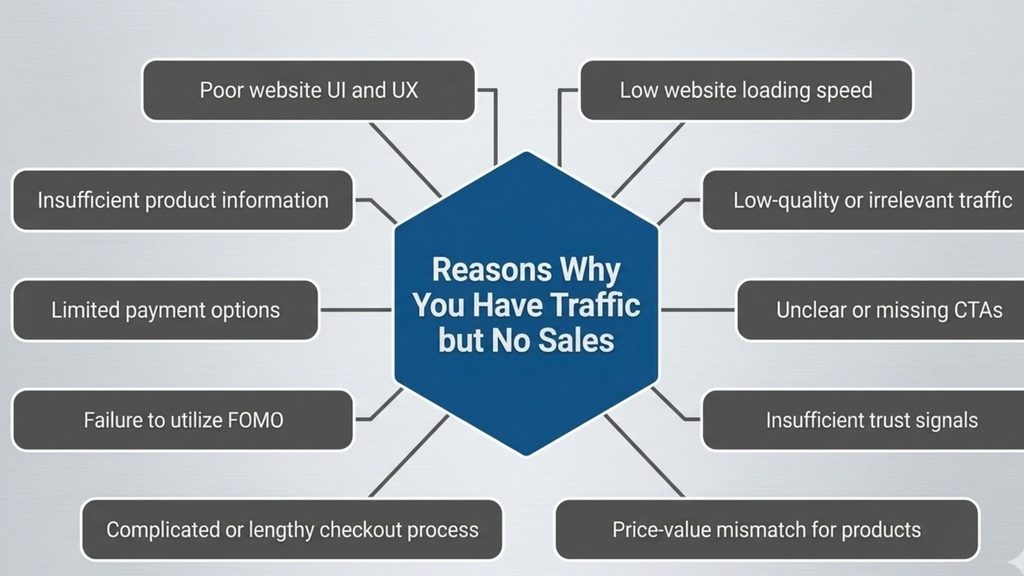
Getting a lot of high traffic to your online store is only the tip of the iceberg. It partially solves your problem, but there is still a lot to generating steady sales. There is actually no question about the effectiveness of your ads if they’re bringing traffic. The likely fault is that people may be finding your website confusing to navigate, which is making them leave in frustration, or that your graphics and copy are not doing the job they are meant to.
A proper online store usually converts about 2% to 3% of its visitors into final buyers. If your conversion rate is dropping below 1%, there is a serious issue in the sales funnel that needs to be addressed. To fix this, start looking closely at every step a customer takes on your site before making a purchase – from the landing page to the final act of checking out. Once you look closely, you might pinpoint exactly where the fault is.
| Funnel Stage | Main Objective | Common Conversion Problem |
|---|---|---|
| Top of Funnel (Awareness) | Target niche audiences | Low-intent informational keywords |
| Middle of Funnel (Consideration) | Build trust and credibility on the product | Weak value proposition and real proof |
| Bottom of Funnel (Decision) | Complete customer checkout | Hidden costs and complex checkout forms |
9 Reasons Your Website Is Getting Visitors but No Sales
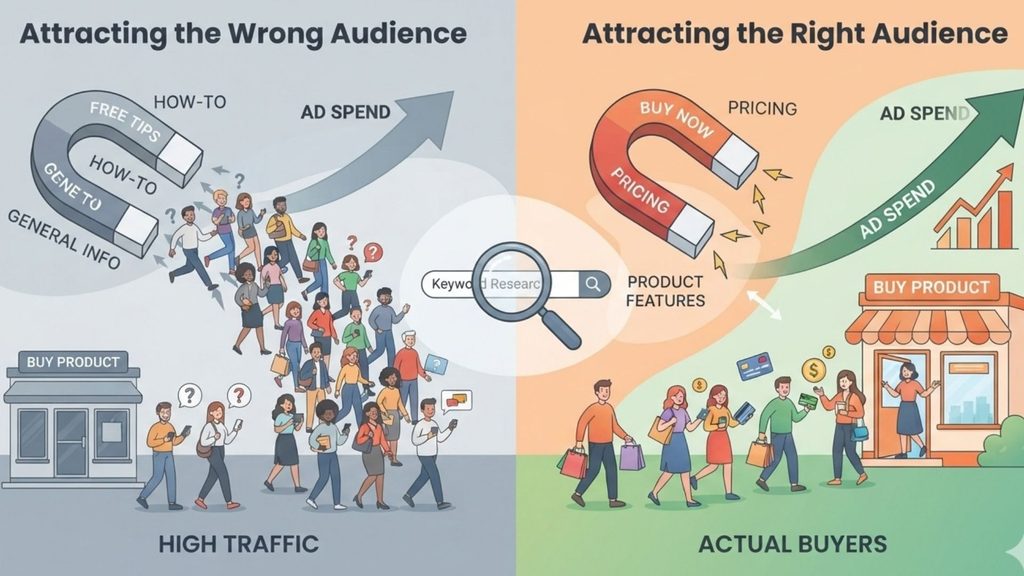
- Attracting the Wrong Audience
High visitor numbers mean nothing if those people have zero interest in buying your product or service. A lot of ad campaigns drive traffic with broad keywords that attract not actual buyers, but mostly people looking for free tips.
To fix this problem, check what people are actually searching for on Google. After you identify the keywords, redirect your ad spending toward those that clearly show customers’ intent to buy. Attracting the right target audiences can increase your sales considerably.
- Weak or Confusing Value Proposition
Mostly, the people who come to your site decide within 5 seconds whether to stay on your site or leave. If it is not immediately clear what you offer and how it can help them, they will exit without much thinking. Generic copy simply doesn’t work these days; you need targeted copy. Here are some tips for better copy:
- State clearly what exact issue your product fixes for the customer.
- Show what makes you different from your competitors
- Place your offer right at the top of the page so people see it easily.
- Poor Mobile User Experience
An online store owner needs to understand that more than 60% of global online shopping traffic comes from smartphones. Yet we see many webpages not at all optimized for mobile users. Interface design flaws, such as unresponsive page layouts or very small text, cause potential buyers to leave the site in frustration. Ensure a flawless mobile user experience so users can glide to buy your products.
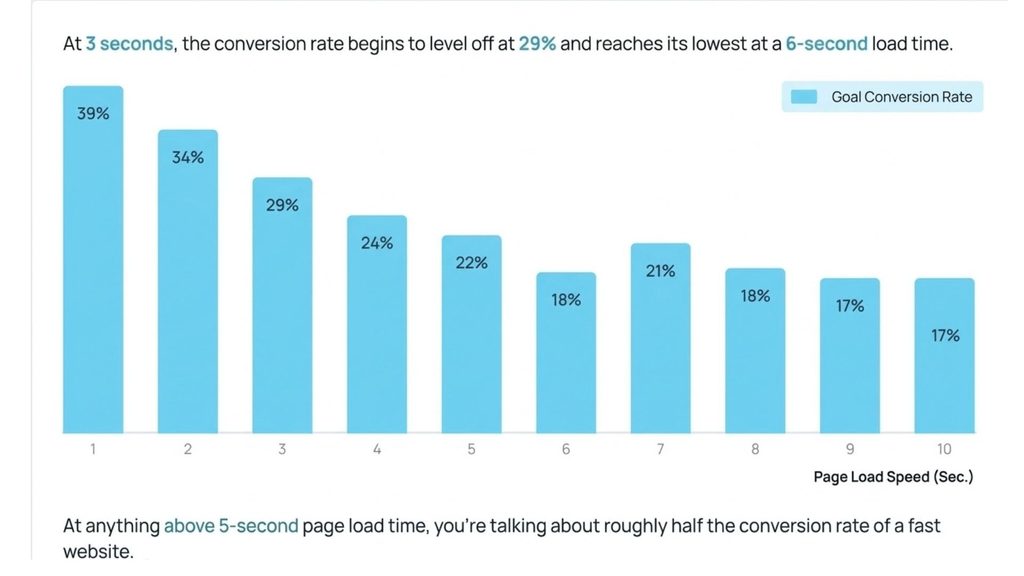
- Slow Page Load Speed
Today, due to huge advancements in internet speed, shoppers usually expect web pages to load in the blink of an eye. The attention economy is growing as people lose patience. So, every extra second of delay in page load can potentially bring your sales down. A few things to ensure better load speed:
- Compress high-resolutions images:
- Enable caching and CDNs
- Remove any unnecessary codes
- Lack of Trust Signals and Social Proof
First-time website visitors are always hesitant to share their sensitive payment details with unknown online sites. If there are no genuine customer reviews and a secure payment label, it can immediately raise suspicions of potential fraud.
To avoid this, always show customer reviews throughout your product pages, a recognized SSL certificate, and a secure payment label with an authentic payment partner. Additionally, be clear and transparent about the product return policies to avoid more suspicions.
- Complicated and Lengthy Checkout Process
A long and lengthy checkout process that asks for unnecessary details quickly frustrates a customer. Additionally, some websites have a mandatory requirement to create an account before checking out, which can waste customers’ time and may reduce their desire to buy immediately. To ensure a smooth checkout process, ensure that;
- You offer guest checkout without making an account first.
- Keep forms short by asking only for basic shipping and billing info.
- Add easy digital payment options.
- Hidden Costs and Surprise Fees
Hidden charges and costs at checkout are the single most common reason why people just leave their carts without making a payment. Sometimes there can be unusually high shipping charges or unwanted taxes, which immediately create trust issues for the customer.
To fix this, add an option to show estimated shipping costs for each pincode early on every product page, so there are no surprises later. You can also make shipping cost free when customers reach a certain order value. This encourages them to buy more.
- Unclear Call to Action Buttons
People usually hate being confused, so they usually need clear, direct instructions on what to do next, especially when shopping online. Vague and cluttered buttons without a clear call to action, such as “Buy Now!” only distract people from making a purchase. Here are a few tips to create irresistible CTA buttons:
- Use bold and high-contrast colors for your CTAs.
- Use a clear and direct message
- Stick to one main call to action
- Missing Product Details and Poor Imagery
Online shopping relies on clear and authentic images and videos, as customers cannot physically see the product. So, unclear or fake product photos or vague product descriptions make people feel unsure about buying.
Therefore, always make sure to upload clear, high-definition photos showing your products from different POVs. Be sure to also include accurate size charts, detailed specs of product materials, or even a short video showing the product in use. This will help the customer be absolutely sure about the product.
Conversion Funnel Audit Checklist
Use this checklist of practical advice to optimise your online shopping site for the best sales results.
| Category to Audit | What to Verify? | Importance |
|---|---|---|
| Traffic Quality | Are keywords accurate with customer buying intent? | High |
| Website Performance | Does your store load fast? | High |
| Customer Trust | Are real customer reviews visible on product pages? | Medium |
| Friction Reduction | Is there an option for guest checkout? | High |
| Mobile Design | Is your online site optimised for mobile users? | High |
How to Fix Conversion Funnel Problems Fast
To fix your low-converting sales funnel, you’d need to carry out step-by-step testing. Start by using tools like Hotjar to review session recordings and heatmaps, which will help you see exactly where your website traffic is getting stuck.
Next, run a simple A/B test on your most important webpages. Try using different header text, play with button colors, or give special discounts or offers. Just make sure to test one thing at a time so you know what exactly is working. A well-designed website with a clear user journey can also help improve conversions through conversion-driven design.
Finally, set up an automated email that gets sent to customers who leave their carts without buying. A quick reminder email about their left cart, especially with a limited-time discount, is the easiest way to bring the customer back.
Frequently Asked Questions (FAQs)
What is a good eCommerce conversion rate?
An average conversion rate for eCommerce typically ranges from 2% to 3%. Top-performing online stores can even reach above 4% with regular optimisation.
Why do people visit my site but do not buy?
There can be many reasons why website visitors usually leave without buying. Some common reasons include the wrong target audience, slow loading speeds, hidden costs in checkout, or a lack of trust-building customer reviews.
How does site speed affect eCommerce sales?
Even a small 2-second delay in the loading time of a web page can potentially cut your sales conversions by 7%.
Why is my cart abandonment rate so high?
People leave the cart without making a purchase for many reasons, such as high shipping fees, mandatory account creation at checkout, or limited
payment options.
How can I attract high-intent buyers to my store?
To attract high-intent buyers, target transactional keywords and refine your demographic filters in your paid ad campaigns.
Leave a Reply